
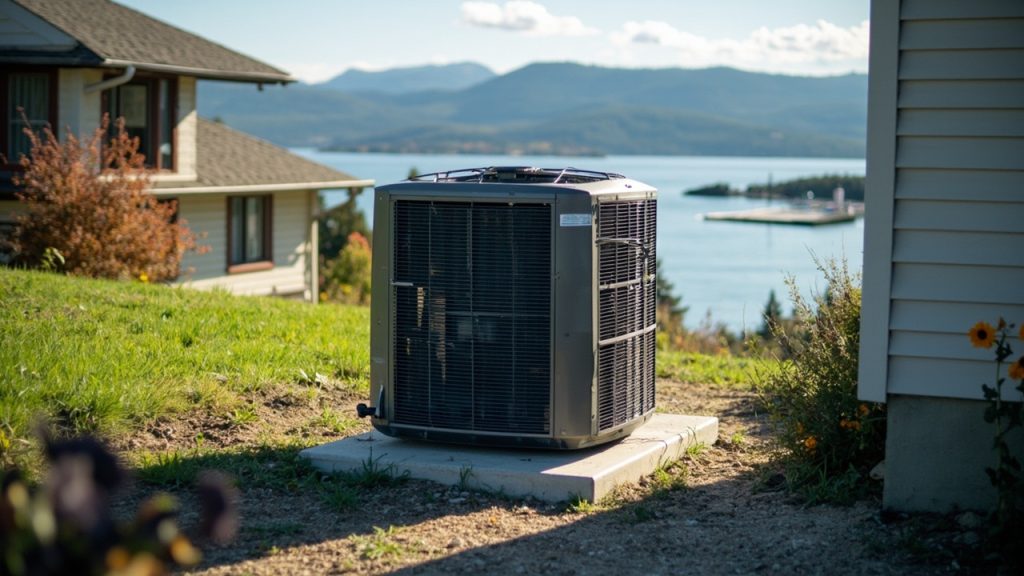
Homeowners around Mountain Island Lake are seeing a major shift in how air conditioning works in 2026. The Environmental Protection Agency recently completed the phase out of R-410A refrigerant for all new residential systems. If you plan to upgrade your cooling system this year, you will purchase a unit that uses newer alternatives such as R-454B or R-32. This change is part of a broader effort to reduce the global warming potential of chemicals used in our homes and businesses. Understanding the new HVAC refrigerant changes if you are buying a unit in Mountain Island Lake is essential for making a wise investment that provides comfort for years to come.
Living near the water in the 28214 or 28216 zip codes brings specific challenges for HVAC equipment. The high humidity coming off the Catawba River basin combined with the heat of a North Carolina summer puts immense pressure on your cooling coils. When you factor in the current refrigerant mandates, choosing the right system becomes a technical decision that affects your comfort and your long term property value. Modern equipment in 2026 is built to handle these specific climate stressors while meeting strict federal efficiency standards. You must choose a system that can stand up to the moisture of the lake while providing the energy savings you expect from modern technology.
The primary driver behind these changes is the AIM Act, which stands for the American Innovation and Manufacturing Act. This federal law requires a significant reduction in the production and consumption of hydrofluorocarbons. These are the gases that have been used in air conditioners for several decades. The current standard is to move toward A2L refrigerants. This classification describes gases that have a lower global warming potential but are considered mildly flammable under very specific conditions. For residents in Mountain Island Lake, this means that any new system installed today must meet these updated federal guidelines. You can read more about these standards on the EPA HFC Phaseout page to understand the environmental impact.
Technical Differences Between R-454B and R-32 Refrigerants
As you research new units in 2026, you will encounter two primary options for refrigerants. R-454B is a blend of R-32 and R-1234yf. Many major manufacturers such as Carrier and Trane have selected this gas because it offers a high level of efficiency while significantly lowering the impact on the atmosphere. R-32 is a single component refrigerant used by manufacturers such as Daikin and Goodman. Both belong to the A2L safety class, but they have different performance characteristics that affect how your system operates in the Charlotte heat.
R-454B has a global warming potential of about 466, making it one of the most environmentally friendly options on the market. It operates at pressures very similar to the old R-410A systems, which helps with the longevity of the compressor. On the other hand, R-32 has a global warming potential of 675. While this is slightly higher than R-454B, it is still much lower than the old standard. R-32 is known for its excellent heat transfer properties, which can lead to higher efficiency ratings in certain equipment configurations. However, R-32 typically has higher discharge temperatures, which requires more robust component engineering to ensure the system lasts its full lifespan.
| Technical Feature | R-410A (Old Standard) | R-454B (New Standard) | R-32 (New Standard) |
|---|---|---|---|
| Global Warming Potential | 2088 | 466 | 675 |
| Composition | Blend (50/50) | Blend (68.9/31.1) | Single Component |
| Safety Classification | A1 (Non-flammable) | A2L (Mildly Flammable) | A2L (Mildly Flammable) |
| Discharge Temperature | Moderate | Moderate | High |
The choice between these two refrigerants often depends on the brand of equipment you prefer. Manufacturers have spent years testing these gases to ensure they perform reliably in climates like ours. Because Mountain Island Lake experiences high humidity, the ability of the refrigerant to transfer heat efficiently during the dehumidification cycle is vital. Both R-454B and R-32 excel at this compared to older gases, which helps your home feel dryer and more comfortable even on the muggiest July afternoons. We often see better moisture removal rates in homes located near the Latta Nature Preserve when using these newer systems.
Safety Standards and Sensor Technology in 2026 Systems
Safety is a common concern for homeowners when they hear the term mildly flammable. It is important to understand that A2L refrigerants are very difficult to ignite. They require a high concentration of gas and a high energy ignition source to catch fire. In a typical Mountain Island Lake home, the amount of refrigerant used is small. The safety sensors required by current building codes provide an extra layer of protection that was not present in older systems. These sensors are a mandatory part of the equipment and cannot be bypassed during the installation process.
When our team performs an installation, we must adhere to strict Mecklenburg County building codes. These codes now require that the indoor evaporator coil cabinet has a sensor that communicates with the furnace or air handler. If a leak occurs, the system automatically circulates air to dilute the refrigerant concentration to a safe level. This prevents any risk of combustion. These mitigation boards also shut down the compressor to stop the flow of refrigerant. This technology ensures that your family stays safe while you enjoy the benefits of a modern and efficient cooling system.
Beyond the sensors, the construction of the units has changed to accommodate the A2L classification. Electrical components that could create a spark are now enclosed in spark proof housings. The fan motors are often designed to start more slowly to prevent sudden electrical arcs. These engineering changes are why you cannot simply put new refrigerant into an old unit. The entire system must be designed from the ground up to handle the specific properties of R-454B or R-32 safely and effectively. This is a primary reason why proper AC installation is more complex in 2026 than in previous years.
Mecklenburg County Permitting and Local Requirements
Installing a new HVAC system in Mountain Island Lake requires following specific local regulations managed by the Mecklenburg County Land Use and Environmental Services Agency. Every residential system replacement requires a mechanical permit. This permit ensures that the county can inspect the work to verify it meets the North Carolina Mechanical Code and North Carolina Energy Conservation Code. In 2026, inspectors are specifically looking for the proper installation of A2L safety components and correct electrical grounding.
The permitting process begins with your contractor filing an application through the Mecklenburg County online portal. Once the installation is complete, a county inspector will visit your home to check several specific items. This process protects the homeowner and ensures the contractor followed all safety protocols for the new refrigerant types.
- Proper sizing of the refrigerant lines to ensure efficiency and safety.
- Verification of the leak detection sensors and mitigation controls inside the air handler.
- Inspection of the electrical disconnect and circuit breaker sizing to prevent overheating.
- Confirmation that the condensate drain line is properly trapped and vented to handle high lake humidity.
- Validation that the outdoor unit is secured to a level pad with proper clearance from the structure.
Working with a contractor who understands these local nuances is critical. If a permit is not pulled or if the inspection fails, it can create issues when you try to sell your home in the future. In neighborhoods near the lake where property values are high, having a fully documented and permitted HVAC installation is a standard expectation. This documentation proves that your system was installed to the highest safety and performance standards of 2026. You can verify permit status on the Mecklenburg County LUESA website.
Duke Energy Smart Saver Rebate Tiers for Charlotte Homeowners
While new equipment carries a higher price tag due to advanced sensors and specialized components, there are significant ways to offset the cost. Duke Energy provides local rebates for homeowners in the Charlotte area who upgrade to qualifying equipment. These rebates are tiered based on the SEER2 rating and other efficiency metrics. In 2026, most R-454B systems naturally meet the higher efficiency brackets because the refrigerant itself allows for better heat transfer compared to older gases.
| Rebate Tier | Minimum SEER2 Requirement | Minimum HSPF2 (for Heat Pumps) | Typical Rebate Value |
|---|---|---|---|
| Tier 1 | 15.2 SEER2 | 7.8 HSPF2 | Moderate Incentive |
| Tier 2 | 16.0 SEER2 | 8.1 HSPF2 | High Incentive |
| Tier 3 | 17.2+ SEER2 | 8.5+ HSPF2 | Maximum Incentive |
To qualify for these rebates, your contractor must provide an AHRI certificate that matches the outdoor unit, the indoor coil, and the furnace or air handler. This certificate proves the system as a whole meets the efficiency ratings claimed. Duke Energy requires that the equipment is installed in a residential home and that the application is submitted within a specific timeframe after the installation. Navigating these tiers is easier when you work with a professional who handles the paperwork and ensures the equipment selection aligns with your financial goals. More details can be found on the Duke Energy Smart Saver page.
In addition to these local rebates, the federal 25C tax credit remains a useful tool for homeowners. This credit can cover a portion of the total project cost for high efficiency heat pumps and air conditioners. When you combine manufacturer promotions, Duke Energy rebates, and federal tax credits, the net cost of a new R-454B system becomes much more manageable. This allows you to invest in a higher quality system that will provide better comfort and lower utility bills for many years. We recommend checking with your tax professional to see how these credits apply to your specific situation.
How Lake Humidity Impacts Your Equipment Choice
The proximity to Mountain Island Lake and the surrounding nature preserve means your HVAC system faces a unique environment. The air is often more saturated with moisture than it is in more urban parts of Charlotte. High humidity levels can lead to biological growth on the cooling coils and can cause the exterior of the unit to corrode faster if not properly maintained. The new R-454B systems are designed with high efficiency in mind, which helps with moisture removal. Many 2026 models feature enhanced coil coatings that resist corrosion from the damp lake air.
Modern inverter driven systems using the new refrigerant can run at lower speeds for longer periods. This allows the system to pull more humidity out of the air without over cooling your home. If you live in a neighborhood like Mount Olive or near the boat ramps, you know that the damp evening air can make a house feel swampy even if the temperature is 72 degrees. A properly sized R-454B unit with a variable speed blower is the best defense against this localized humidity. This prevents the heavy, sticky feeling that often occurs in lakeside homes during the spring and fall. For more tips on managing moisture, see our guide to local humidity control.
We also recommend considering a whole home dehumidifier if your home has a lot of glass facing the water. The sun coming off the lake can heat up your living space while the humidity remains high. Even the best air conditioner might struggle to balance the sensible heat and the latent moisture on those specific days. Integrating a dehumidifier with your new R-454B system provides the ultimate control over your indoor environment. This protects your furniture, your hardwood floors, and your indoor air quality from the effects of excess moisture. This approach is much better than simply lowering the thermostat to uncomfortable levels.
Repairing versus Replacing Your Current R-410A Unit
If your current unit uses R-410A and it breaks down, you have a difficult choice to make. While R-410A is still available for repairs in 2026, the price of the gas has increased as production has scaled back. A simple leak repair that used to be affordable can now cost a significant amount of money just for the refrigerant alone. You must weigh this cost against the benefits of a full system replacement. Most systems near the lake last about 12 to 15 years before the coils succumb to the humidity and the compressor loses efficiency.
Consider these factors when making your decision.
- The age of your current system and whether it is near its expected lifespan of fifteen years.
- The rising cost of R-410A refrigerant in the current 2026 market due to limited supply.
- The availability of replacement parts for older models as manufacturers pivot to newer A2L technology.
- The long term energy savings offered by modern variable speed equipment using R-454B refrigerant.
- The protection provided by a new manufacturer warranty on a brand new 2026 system.
Putting money into an obsolete refrigerant platform is often a losing proposition. As the supply of R-410A continues to dwindle, the cost will only go up. Choosing a new R-454B or R-32 system today ensures that you will have access to affordable refrigerant and parts for the next two decades. It also increases the resale value of your home because buyers in 2026 are looking for properties with modern, environmentally compliant infrastructure. Reliability is critical during the peak summer months near the lake and a new system provides the peace of mind you need. You can schedule a system diagnostic to see if your old unit is still worth the investment.
Frequently Asked Questions About 2026 HVAC Changes
Will my energy bills go down with the new refrigerant? Yes, in most cases, they will. R-454B and R-32 systems are more efficient at transferring heat than R-410A systems. When combined with modern variable speed compressors and high efficiency blowers, many homeowners see a noticeable reduction in their monthly Duke Energy bills. The exact savings will depend on the SEER2 rating of the system you choose and the insulation levels in your Mountain Island Lake home. Older homes in the 28216 area might need extra attic insulation to see the maximum benefit.
Is the new refrigerant more expensive? The equipment itself has a higher upfront cost because of the required safety sensors and mitigation boards. However, the refrigerant itself is expected to remain stable in price as production increases. In contrast, the old R-410A refrigerant is becoming increasingly expensive as it is phased out of production. Investing in the new technology now avoids the future high costs of maintaining an obsolete system. This is a common pattern in the industry when standards change.
Are the new systems louder because of the safety features? No, the safety features are largely electronic and do not impact the noise levels of the unit. In fact, many 2026 models are quieter than older units because they use advanced fan blade designs and sound blankets on the compressors. If you have an outdoor living space near the lake, you will appreciate the lower decibel levels of a modern R-454B heat pump or air conditioner. Quiet operation is a high priority for manufacturers in the current market.
What happens if my new system develops a leak? If a leak occurs in an A2L system, the internal sensors will detect the presence of the refrigerant. The mitigation board will immediately shut down the cooling cycle and turn on the indoor blower fan. This circulates the air to keep the concentration of refrigerant below any level that could be considered dangerous. You would then call your service technician to find and repair the leak just as you would with an older system. The main difference is the added electronic protection that warns you of the problem early.
Can I use my existing thermostat with an R-454B system? This depends on the specific model you choose. Many high efficiency systems in 2026 use communicating thermostats that provide detailed data to the technician and allow for precise control over humidity. While some basic models may still work with standard thermostats, we usually recommend using the manufacturer suggested control to get the most out of your new equipment. This ensures all safety and efficiency features work exactly as designed by the engineers.
Finding Local Installation Experts in Mountain Island Lake
When you are ready to move forward with a new installation, choosing a local partner is essential. You need someone who understands the specific permitting requirements of Mecklenburg County and the unique climate challenges of the Catawba River basin. We have been serving the local community for many years and have adapted to every major change in the industry. Our goal is to make the transition to new refrigerants as smooth as possible for your family.
Properly sizing the system is more important than ever. In the past, many contractors would simply install a unit based on the square footage of the home. Today, we perform detailed load calculations that account for your insulation levels, window types, and the specific sun exposure of your lot. An oversized unit will short cycle, leading to high humidity and premature component failure. An undersized unit will run constantly and fail to keep you cool on a 95 degree day in Charlotte. Our technical expertise ensures your system is perfectly matched to your home. We use professional software to ensure every calculation is accurate to the current standards.
Investing in a new HVAC system is a significant decision. By choosing an R-454B unit today, you are future proofing your home and ensuring that you will have access to affordable service for years to come. You are also doing your part to protect the beautiful natural environment that makes living near Mountain Island Lake so special. If you have questions about how these changes affect your home, reach out to a local expert who can provide a detailed assessment of your cooling needs.
About the Author
Mark Stevens serves as our Senior Comfort Specialist and lead technician for the Mountain Island Lake region. He holds a NATE certification in Residential Air Conditioning and Heat Pump Installation. Mark also carries an EPA Section 608 Universal certification which allows him to handle all types of refrigerants safely according to federal law. With over fifteen years of field experience in the Charlotte metro area, he ensures that every installation meets the high standards required by current Mecklenburg County codes. Mark specializes in high humidity management for lakeside properties.
If you live near the water and need help with your cooling system, contact our Mountain Island Lake service team today. You can reach our office at 704-555-0199 to schedule an appointment for a free system evaluation. You can also visit our Mountain Island Lake service page to book your consultation online. We are ready to help you navigate the new refrigerant standards with confidence and ease.
{
“@context”: “https://schema.org”,
“@type”: “BlogPosting”,
“headline”: “How to Choose a New Air Conditioner in Mountain Island Lake with Current Refrigerant Standards”,
“description”: “Learn about current HVAC refrigerant changes in Mountain Island Lake. Understand R-454B and R-32 standards for 2026 and how to save with local rebates.”,
“wordCount”: 3084,
“datePublished”: “2026-03-07T13:11:00.000Z”,
“dateModified”: “2026-03-07T13:11:00.000Z”,
“inLanguage”: “en-US”,
“mainEntityOfPage”: {
“@type”: “WebPage”,
“@id”: “https://keystonehvaccharlotte.com”
},
“publisher”: {
“@type”: “LocalBusiness”,
“name”: “Keystone HVAC Charlotte”,
“url”: “https://keystonehvaccharlotte.com”
},
“author”: {
“@type”: “Organization”,
“name”: “Keystone HVAC Charlotte”,
“url”: “https://keystonehvaccharlotte.com”
},
“image”: {
“@type”: “ImageObject”,
“url”: “https://keystonehvaccharlotte.com/wp-content/uploads/2026/03/understanding-the-new-hvac-refrigerant-changes-if-1.jpg”
}
}
{
“@context”: “https://schema.org”,
“@type”: “HVACBusiness”,
“name”: “Keystone HVAC Charlotte”,
“url”: “https://keystonehvaccharlotte.com”,
“address”: {
“@type”: “PostalAddress”,
“addressLocality”: “Charlotte”
},
“areaServed”: {
“@type”: “City”,
“name”: “Charlotte”
}
}
{
“@context”: “https://schema.org”,
“@type”: “BreadcrumbList”,
“itemListElement”: [
{
“@type”: “ListItem”,
“position”: 1,
“name”: “Home”,
“item”: “https://keystonehvaccharlotte.com”
},
{
“@type”: “ListItem”,
“position”: 2,
“name”: “Blog”,
“item”: “https://keystonehvaccharlotte.com/blog”
},
{
“@type”: “ListItem”,
“position”: 3,
“name”: “How to Choose a New Air Conditioner in Mountain Island Lake with Current Refrigerant Standards”
}
]
}
{
“@context”: “https://schema.org”,
“@type”: “Service”,
“serviceType”: “HVAC”,
“provider”: {
“@type”: “LocalBusiness”,
“name”: “Keystone HVAC Charlotte”,
“url”: “https://keystonehvaccharlotte.com”
},
“areaServed”: {
“@type”: “City”,
“name”: “Charlotte”
},
“description”: “Learn about current HVAC refrigerant changes in Mountain Island Lake. Understand R-454B and R-32 standards for 2026 and how to save with local rebates.”
}