menu

Iced Up Evaporator Coil in Charlotte – Expert Diagnosis Stops the Damage Fast

When your air conditioner coil freezes up, you need technicians who understand Charlotte's high humidity and can identify the root cause, not just thaw the ice and leave you with the same problem next week.

Slider Image 1
Slider Image 2
Slider Image 3
Slider Image 4
Slider Image 5
Slider Image 7
Slider Image 8
Slider Image 9
Slider Image 10
Slider Image 11

Why Your AC Evaporator Coil Keeps Icing Over in Charlotte

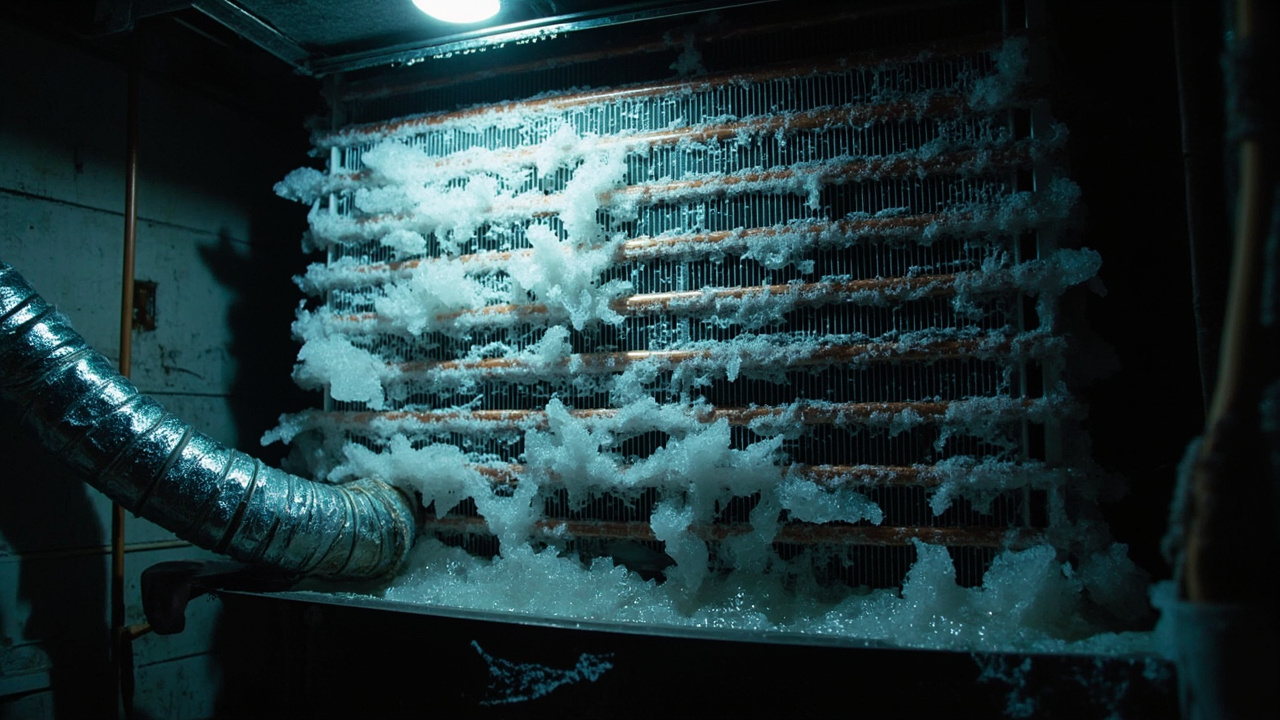
You walk past your air handler and notice ice coating the evaporator coil. The cold air stops flowing. Your system runs nonstop but your house stays warm. A frozen ac evaporator coil is not just an inconvenience. It signals a failure somewhere in your refrigerant loop, airflow path, or drainage system.

Charlotte's climate makes this worse. We see sustained humidity above 70 percent from May through September. When your evaporator coil operates below 32 degrees because of restricted airflow or low refrigerant charge, moisture in that humid air freezes instantly on the coil fins. The ice blocks airflow. The compressor keeps running. The ice gets thicker. You end up with a solid block of frozen cooling coils and a system that cannot cool.

The most common causes are clogged air filters, dirty coil fins, collapsed ductwork in crawlspaces, low refrigerant from a leak, or a failing blower motor that cannot push enough air across the coil. In older homes near Dilworth and Myers Park, we also see undersized return ducts that starve the system of air. The coil temperature drops. The air conditioner coil freezing up becomes a recurring nightmare every summer.

You cannot just scrape off the ice and hope it goes away. The ice is a symptom. The underlying defect will cause the same ac evaporator iced over scenario within days. You need a technician who can measure airflow, test refrigerant pressures, inspect the drain pan, and fix the actual problem.

Why Your AC Evaporator Coil Keeps Icing Over in Charlotte
How We Diagnose and Fix Ice on Evaporator Coil

How We Diagnose and Fix Ice on Evaporator Coil

We do not guess. We measure. When you call us for a frozen ac evaporator coil, we arrive with a full diagnostic toolkit: digital manifold gauges, airflow meters, temperature probes, and leak detection equipment.

First, we shut down the system and let the ice melt safely. Forcing airflow through frozen coils can bend fins and destroy the heat exchanger. We inspect the condensate drain pan for standing water, algae buildup, or a clogged drain line. A blocked drain pan raises humidity inside the air handler, accelerating ice formation.

Next, we pull the air filter and inspect the evaporator coil fins under LED work lights. Dust, pollen, and pet dander coat the fins in Charlotte homes. Even a thin layer reduces airflow by 30 percent. We measure the temperature differential across the coil. A properly functioning evaporator should show a 15 to 20 degree drop from incoming to outgoing air. Anything below that signals restricted airflow or refrigerant starvation.

We check the blower motor capacitor, measure static pressure in the ductwork, and verify that the blower wheel is clean. A filthy blower wheel moves 40 percent less air. We also test refrigerant charge with superheat and subcooling calculations. Low refrigerant from a leak causes the evaporator to run too cold. We find the leak, repair it, evacuate the system, and recharge to factory specifications.

If airflow is the culprit, we clean the coil, replace the filter, seal duct leaks, or upgrade the return duct size. The goal is to restore proper airflow and refrigerant balance so your coil operates above freezing under load.

What Happens When We Arrive for Your Frozen Coil

Iced Up Evaporator Coil in Charlotte – Expert Diagnosis Stops the Damage Fast
01

System Shutdown and Inspection

We shut off the air conditioner and switch the fan to circulate room-temperature air through the frozen evaporator coil. This thaws the ice safely without damaging the coil fins. While the ice melts, we inspect the air handler cabinet, drain pan, and surrounding ductwork for secondary issues like water damage, mold growth, or disconnected ducts. We document everything with photos.
02

Airflow and Refrigerant Testing

Once the coil is clear, we measure airflow across the evaporator using a hot wire anemometer. We test static pressure at multiple points in the duct system. We attach manifold gauges to the service ports and record suction pressure, discharge pressure, superheat, and subcooling. These numbers tell us if the system is starved for air, starved for refrigerant, or both. We identify the defect.
03

Repair and Verification

We fix the root cause, whether that means cleaning the coil, replacing the filter, sealing a refrigerant leak, or replacing a failing blower motor. After repairs, we run the system through a full cooling cycle and monitor evaporator temperature, airflow velocity, and refrigerant pressures. We verify that the coil stays above freezing under load. You get documentation of all measurements and repairs.

Why Charlotte Homeowners Trust Keystone HVAC for Evaporator Coil Problems

Charlotte summers are brutal. You need your air conditioner working at full capacity from May through September. When your evaporator coil ices over, you need a technician who understands the interaction between airflow, refrigerant charge, and humidity load in this climate.

We have diagnosed hundreds of frozen cooling coils in Charlotte homes. We know the common failure modes: dirty coils in homes near construction sites in South End, undersized ductwork in older homes in Plaza Midwood, refrigerant leaks from vibration damage in units installed on second-floor platforms, and failed blower motors in systems that run 12 hours a day during heat waves.

We do not sell you a new air handler when a coil cleaning and duct modification will fix the problem. We also do not patch a refrigerant leak with sealant and call it done. We find the leak, repair it properly, and verify the fix with nitrogen pressure testing and electronic leak detection. You get a permanent repair, not a temporary patch that fails in three months.

Our technicians carry the tools to handle complex diagnostics on site. We measure airflow, test capacitors, check contactor voltage, and calculate refrigerant charge to EPA standards. We also carry common repair parts like blower motor capacitors, contractor relays, and air filters on every truck. Most frozen coil repairs are completed in a single visit.

We operate throughout the Charlotte metro, including Myers Park, Dilworth, South End, Plaza Midwood, and NoDa. We know the housing stock. We know which HVAC brands are common in each neighborhood. We know how to navigate tight crawlspaces and attics in older homes. You get local expertise, not a franchise technician reading a script.

What to Expect When You Call Us for a Frozen Coil

Same-Day Service Availability

We understand that a frozen evaporator coil means no cooling in your home. We prioritize these calls and offer same-day service when you contact us before noon. Our technicians work extended hours during Charlotte summers to handle the surge in cooling emergencies. You get a two-hour arrival window, not an all-day wait. We call 20 minutes before arrival so you can plan your day. You will not sit home for eight hours waiting for a technician.

Comprehensive System Diagnostic

We perform a full system evaluation, not just a visual inspection. This includes measuring airflow with calibrated instruments, testing refrigerant charge with manifold gauges, inspecting the coil under LED lighting, checking blower motor amperage, and verifying proper condensate drainage. We also inspect ductwork for leaks or restrictions. You get a written diagnostic report that explains what caused the ice buildup and what needs to be repaired. We explain everything in plain language before we start work.

Permanent Repairs with Documentation

We fix the underlying defect, not just the symptom. If your coil froze because of low refrigerant, we find and repair the leak, evacuate the system, and recharge to factory specifications. If airflow restriction caused the problem, we clean the coil, replace the filter, and seal duct leaks. Every repair includes before and after measurements so you can verify the system is operating correctly. You get photos, refrigerant pressure readings, and airflow measurements in your service report.

Preventive Maintenance Recommendations

After we restore your system, we provide specific recommendations to prevent future freezing. This might include upgrading to a high-efficiency filter, scheduling biannual coil cleanings, installing a condensate drain alarm, or modifying return ductwork to improve airflow. We also offer maintenance plans that include priority service, annual inspections, and discounted repairs. You get a clear maintenance schedule tailored to your system and home, not a generic checklist.

Frequently Asked Questions

You Have Questions,
We Have Answers

What causes ice on an evaporator coil? +

Ice forms on your evaporator coil when airflow drops or refrigerant pressure shifts. Clogged air filters block the warm air needed to prevent freezing. Low refrigerant from a leak causes the coil to run too cold. In Charlotte's humid summers, dirty coils trap moisture that quickly freezes. A failed blower motor or closed supply vents also reduce airflow. Thermostat malfunctions can force the system to overcool. You may see ice buildup within hours during peak cooling season. Turn off your AC immediately to prevent compressor damage and call a technician to diagnose the root cause.

What is the best way to thaw out an iced up evaporator coil? +

Turn off your AC at the thermostat and the breaker. Let the system sit for 4 to 8 hours. Never chip or scrape the ice, you will damage the delicate aluminum fins. Place towels under the unit to catch melt water. You can speed thawing by switching the thermostat to fan-only mode, which circulates air without cooling. Charlotte's high humidity means ice melts slower indoors. Once thawed, check your air filter and replace it if dirty. Do not restart the system until a technician identifies why the coil froze, or it will freeze again.

Will low refrigerant cause an evaporator to ice up? +

Yes. Low refrigerant is a common cause of evaporator coil icing. When refrigerant levels drop from a leak, the remaining refrigerant expands too much and drops the coil temperature below freezing. Charlotte HVAC systems lose refrigerant from vibration, corrosion, or poor installation. You cannot just add refrigerant and ignore it. A technician must locate and repair the leak, then recharge the system to manufacturer specs. Running your AC with low refrigerant damages the compressor and costs you more. If you see ice forming repeatedly, refrigerant loss is a likely culprit.

How to melt ice on an evaporator coil? +

Turn off the AC completely at the thermostat and circuit breaker. Let the ice melt naturally for 4 to 8 hours. Place towels or a drip pan under the indoor unit to catch water. You can run the fan-only setting to move air across the coil and speed melting, but avoid forcing heat onto the coil. Never use a heat gun or hairdryer, you risk warping the fins or cracking refrigerant lines. Charlotte's warm ambient temperatures help the process. After the ice melts, replace your air filter and inspect for airflow restrictions before restarting the system.

What is the likely cause for heavy icing in the evaporator coil? +

Heavy ice buildup points to severe airflow restriction or a major refrigerant issue. A completely blocked air filter chokes the system. Collapsed ductwork or closed dampers trap air. Failed blower motors stop airflow entirely. Charlotte homes with undersized return ducts experience this problem often. Severe refrigerant leaks cause the coil to run ice-cold continuously. Frozen drain lines can back up and coat the coil. Dirty coils caked with pollen and dust act as insulators. A malfunctioning expansion valve also starves the coil. Professional diagnosis is required because multiple failures often overlap.

Can I turn my AC back on after it thaws? +

Not until you fix the underlying problem. If you just turn the AC back on after thawing, the coil will freeze again within hours. First, replace your air filter and check that all supply vents are open. Inspect the condensate drain for blockages. If the coil refreezes after these steps, you have a refrigerant leak, a failed blower, or a control board issue. Charlotte's cooling season runs long, so repeated freeze-thaw cycles damage the compressor. Call a technician to diagnose the cause before restarting. Running a faulty system costs more in repairs later.

What are the six common causes of evaporator freezing? +

The six common causes are dirty air filters, low refrigerant from leaks, failed blower motors, closed or blocked vents, dirty evaporator coils, and thermostat malfunctions. Charlotte's pollen-heavy springs clog filters fast, restricting airflow. Refrigerant leaks drop coil temperature below freezing. Blower failures stop warm air circulation. Homeowners closing too many vents create pressure imbalances. Coils coated in dust act as insulators. Faulty thermostats run the system nonstop. Each cause prevents the coil from absorbing enough heat, allowing condensation to freeze. A technician can identify which combination is affecting your system.

What is the 3 minute rule for AC? +

The 3-minute rule prevents compressor damage. After turning off your AC, wait at least 3 minutes before restarting. This lets refrigerant pressure equalize between the high and low sides of the system. Starting the compressor too soon forces it to work against high pressure, which burns out the motor. Charlotte technicians see premature compressor failure from repeated short cycling. This rule applies after power outages, thermostat adjustments, or any shutdown. Modern thermostats often have built-in delay timers. If your system short cycles frequently, you have a deeper electrical or refrigerant issue requiring professional repair.

Can you run AC with frozen coils? +

No. Running your AC with frozen coils damages the compressor and wastes energy. The ice blocks airflow and prevents heat exchange, so your home stays warm while the system runs continuously. The compressor works harder pumping refrigerant through a frozen coil, which overheats the motor. Liquid refrigerant can flood back to the compressor and cause catastrophic failure. Charlotte's high cooling demand makes this mistake expensive. Turn off the system immediately when you spot ice. Let it thaw completely, fix the root cause, then restart. Ignoring frozen coils turns a $200 repair into a $3,000 compressor replacement.

What is the $5000 AC rule? +

The $5,000 rule is outdated guidance suggesting you multiply the repair cost by the system age, and replace the unit if the total exceeds $5,000. A 10-year-old system needing a $600 repair equals $6,000, so you would replace it. This rule ignores efficiency improvements, refrigerant costs, and actual system condition. Charlotte's cooling load and rising energy costs make newer systems attractive. Better advice is to replace systems over 15 years old needing major repairs like compressor or coil replacement. Get a second opinion and compare repair costs against replacement savings over five years.

How Charlotte's Humidity Accelerates Evaporator Coil Freezing

Charlotte sits at the intersection of Piedmont humidity and coastal moisture flow. Summer dew points regularly exceed 70 degrees. When outdoor humidity stays above 65 percent for weeks at a time, your air conditioner pulls gallons of water from the air every day. That moisture condenses on the evaporator coil. If airflow is even slightly restricted, the coil temperature drops below freezing. The moisture turns to ice instead of draining away. Homes near Lake Norman or Lake Wylie see even higher humidity loads. A dirty filter or slightly low refrigerant charge that might not cause freezing in a drier climate will freeze your coil solid in Charlotte.

Charlotte HVAC technicians need to understand psychrometrics and the relationship between humidity load and evaporator temperature. We see this problem repeatedly in homes with undersized return ducts, a common issue in 1980s and 1990s construction in neighborhoods like Ballantyne and Stonecrest. Local building codes have tightened since then, but older systems were often installed with minimal return air pathways. Keystone HVAC Charlotte has worked on hundreds of systems in these areas. We know which duct modifications work and which ones violate code. You get a technician who understands both the physics of refrigeration and the practical realities of Charlotte home construction.
HVAC Services in The Charlotte Area

Keystone proudly serves homes and businesses throughout Charlotte and nearby areas. Whether you’re looking for fast repairs, expert installations, or seasonal HVAC maintenance, our team is just a call away. Use the map below to locate our service area or office location, and don’t hesitate to reach out if you have questions. We’re committed to making your experience seamless from the first call to the final service. Let us show you why we’re Charlotte’s go-to HVAC experts.

Address:
Keystone HVAC Charlotte, 6000 Fairview Rd, Charlotte, NC, 28210

Additional Services We Offer

Our news updates

Latest Articles & News from The Blogs

Living in Davidson during a North Carolina summer means dealing with heavy humidity and temperatures that frequently climb into the…

Fast Air Conditioning Repair in Davidson When the Heat Is Unbearable

Living in Davidson during a North Carolina summer means dealing with heavy humidity and temperatures that frequently climb into the…

Heat Pump Replacement Services in Cornelius and Lake Norman

Expert Heat Pump Replacement in Cornelius NCHomeowners in Cornelius face a unique set of weather challenges. The moisture coming off…

Smart Strategies to Lower Utility Bills for Large Quail Hollow Estates

Smart Strategies to Lower Utility Bills for Large Quail Hollow Estates Managing a large estate in the Quail Hollow neighborhood…

Contact Us

Your air conditioner should not ice over. Call Keystone HVAC Charlotte at (980) 342-9990 for same-day diagnostic service. We find the root cause, fix it right, and get your system cooling again.