menu

Commercial AC Repair in Charlotte – Minimizing Downtime for Your Business Operations

When your commercial cooling system fails, every minute of downtime costs you money. Our industrial-grade commercial air conditioning repair services get your Charlotte business back to full capacity fast.

Slider Image 1
Slider Image 2
Slider Image 3
Slider Image 4
Slider Image 5
Slider Image 7
Slider Image 8
Slider Image 9
Slider Image 10
Slider Image 11

Why Commercial Cooling Failures Hit Charlotte Businesses Harder

Charlotte's humid subtropical climate creates brutal conditions for commercial HVAC systems. Summer heat indexes regularly exceed 100 degrees, while humidity levels spike above 70 percent from May through September. Your commercial air conditioning repair needs are not just about comfort. They are about productivity, inventory protection, and regulatory compliance.

A failed compressor in a South End retail space means lost sales during peak shopping hours. A refrigerant leak in a NoDa restaurant kitchen puts food safety inspections at risk. Industrial ac repair delays in a warehouse near Charlotte Douglas International Airport can halt shipping operations and breach client contracts.

Charlotte's rapid commercial development adds another layer of complexity. Mixed-use buildings in Uptown often house outdated RTU units installed during initial construction phases. These rooftop units struggle to maintain consistent airflow across multiple floors, creating hot spots that disrupt office operations. The thermal load from glass facades in newer South Boulevard developments overwhelms undersized condensers, leading to premature equipment failure.

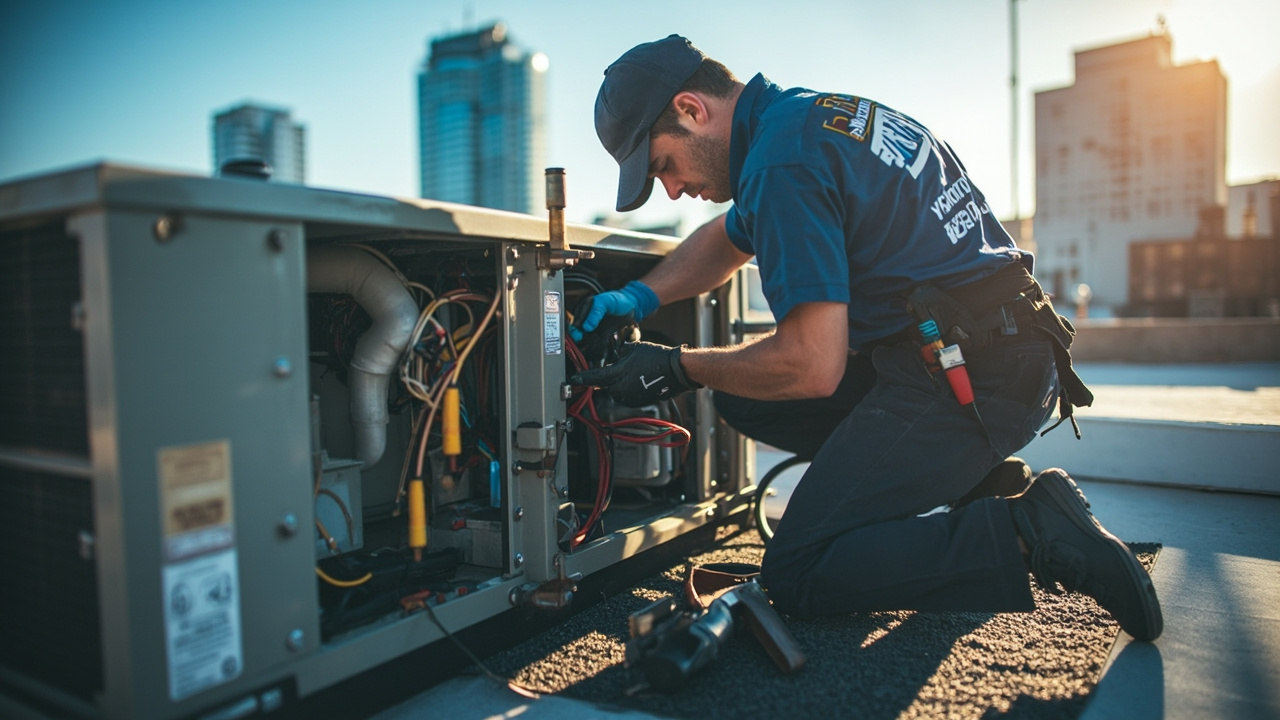
Your business cooling repair is not a residential service call scaled up. Commercial systems run continuously, cycle more frequently, and operate under constant load stress. When a three-phase compressor fails or a VFD controller malfunctions, you need industrial expertise and commercial-grade replacement parts. Generic HVAC technicians lack the diagnostic equipment to troubleshoot building automation systems or identify voltage imbalances in 480-volt circuits.

The window for acceptable downtime in commercial environments is measured in hours, not days. Every degree above 78 reduces employee productivity by 4 percent. Data centers require uninterrupted cooling to prevent server damage. Medical facilities face immediate compliance violations when environmental controls fail.

Why Commercial Cooling Failures Hit Charlotte Businesses Harder
How We Execute Commercial HVAC Repair Without Disrupting Operations

How We Execute Commercial HVAC Repair Without Disrupting Operations

Our commercial ac repair protocol starts with load calculation verification. We measure actual versus design tonnage to determine if your system failure stems from equipment inadequacy or component breakdown. A 20-ton rooftop unit serving a 5,000-square-foot space in Plaza Midwood should maintain 400 CFM per ton. If airflow drops below this threshold, we trace the restriction through the economizer dampers, filter banks, and supply ductwork before condemning the blower assembly.

We diagnose three-phase power issues that residential technicians miss entirely. Voltage imbalance above 2 percent destroys compressor windings within months. We use power quality analyzers to measure phase-to-phase voltage, identify harmonic distortion, and verify proper grounding. A floating neutral in a 208-volt panel will show normal voltage readings with a standard multimeter but cause nuisance trips and premature contactor failure.

Refrigerant troubleshooting in commercial systems requires different methodology than residential splits. We calculate superheat and subcooling at design conditions, not ambient temperature. A 410A system operating at 118 degrees condensing temperature needs 10-15 degrees subcooling. If subcooling drops below 5 degrees, you have insufficient charge or a restriction in the liquid line. We use refrigerant scales and micron gauges, not sight glasses and guesswork.

Business ac repair often involves coordinating with building management systems. We interface with Trane, Carrier, and Johnson Controls BAS platforms to verify setpoint schedules, override commands, and sensor calibration. A malfunctioning space temperature sensor can trigger unnecessary compressor cycling, while a misconfigured economizer lockout prevents free cooling during mild weather.

We stock commercial-grade components that residential suppliers do not carry. Copeland scroll compressors in 3-15 ton capacities. Honeywell industrial thermostats. Belimo damper actuators. White-Rodgers fan relays rated for continuous duty cycles.

What Happens During Your Commercial AC Repair Service Call

Commercial AC Repair in Charlotte – Minimizing Downtime for Your Business Operations
01

Emergency System Assessment

We dispatch a commercial-certified technician within two hours of your call. The initial assessment measures supply air temperature, return air temperature, static pressure across the coil, amperage draw on all motors, and refrigerant pressures at the service ports. We document baseline readings before disassembling any components. This data determines whether you need a repair, a temporary bypass, or an emergency rental unit to maintain operations while we source parts.
02

Targeted Component Repair

We isolate the failed component and execute the repair with minimal system shutdown time. Compressor replacements include oil analysis, filter-drier installation, and evacuation to 500 microns before recharge. Blower motor replacements require sheave alignment and belt tensioning to manufacturer specifications. Control board repairs involve firmware verification and sensor recalibration. We test all safeties including high-pressure cutouts, low-pressure switches, and crankcase heaters before returning the system to service.
03

Performance Verification and Documentation

We run the system through multiple cooling cycles while monitoring approach temperature, temperature split, and power consumption. A properly functioning 10-ton unit should pull 28-32 amps at full load on each leg of a three-phase circuit. We provide documentation showing pre-repair conditions, components replaced, and post-repair performance data. This report satisfies your maintenance records for lease compliance and warranty validation. You receive a recommended maintenance schedule based on runtime hours and load conditions.

Why Charlotte Businesses Choose Keystone HVAC for Commercial Cooling Repair

We understand Charlotte's commercial building infrastructure because we service it daily. The mixed-age building stock in areas like Dilworth and Myers Park means we repair systems ranging from 1980s Trane Voyager units to current high-efficiency Carrier AquaSnap chillers. We know which parts cross-reference between discontinued models. We maintain relationships with local supply houses that stock hard-to-find components for legacy equipment.

Our technicians hold EPA Universal certification and NATE Commercial Refrigeration credentials. This matters when troubleshooting complex refrigeration circuits in supermarket applications or diagnosing cascade systems in pharmaceutical facilities. We handle refrigerants including R-22, R-410A, R-404A, and the newer A2L blends entering the market under updated regulations.

Charlotte's commercial construction boom created a secondary problem: inexperienced installation. We regularly diagnose new system failures caused by improper startup procedures. A compressor installed without proper oil charge will fail within weeks. Ductwork sized incorrectly creates static pressure problems that no amount of adjustment fixes. We provide honest assessments when a repair is uneconomical compared to proper reinstallation.

We maintain commercial service agreements with properties throughout Mecklenburg County. This gives us building access credentials, equipment histories, and parts inventory specific to your facility. When you call at 2 AM because your server room is overheating, we already know you have a split DX system with a remote condenser on the roof. We bring the contactor, capacitor, and TXV that commonly fail on your specific model.

Our response time protects your business continuity. We arrive with fully-stocked service vehicles containing diagnostic equipment, refrigerant recovery machines, and common replacement parts. You do not wait three days for us to order a relay.

What You Can Expect from Our Commercial HVAC Repair Process

Rapid Response Dispatch

We prioritize commercial calls based on business impact. A retail location losing cooling during operating hours receives immediate dispatch. Office buildings with redundant systems may schedule service during off-peak hours to reduce labor costs. We provide accurate arrival windows and text notifications when the technician is en route. Our average commercial response time is under two hours for emergency calls. For scheduled maintenance, we work around your business hours to minimize disruption. Weekend and after-hours service carries no additional trip charges for contract customers.

Comprehensive System Diagnostics

We perform full-system analysis, not just component replacement. This includes airflow measurement using a Shortridge velometer, refrigerant charge verification through superheat and subcooling calculations, electrical load testing on all motors and compressors, and control sequence verification. We identify underlying causes, not just symptoms. A failed compressor often indicates a separate issue like electrical problems or restricted airflow. We test contactors for pitting, measure capacitor microfarads against nameplate ratings, and verify proper voltage at the disconnect. You receive a written diagnostic report explaining findings in operational terms.

Commercial-Grade Repairs

We install OEM or equivalent commercial-grade replacement parts rated for continuous-duty operation. Residential-grade components fail rapidly under commercial load conditions. Our repairs include proper brazing techniques using nitrogen purge to prevent copper oxidation. We replace filter-driers any time a compressor is changed or refrigerant contamination is detected. All refrigerant circuits undergo evacuation to 500 microns before recharge. We use digital scales to charge by weight, not pressure charts. Electrical repairs include proper wire sizing, torque specifications on terminal connections, and thermal imaging to verify connections run cool under load.

Documented Service Records

Every service call generates a detailed report showing system measurements before and after repair, parts installed with model and serial numbers, and refrigerant added with EPA-required documentation. This documentation satisfies lease requirements for maintained HVAC systems and provides warranty validation for parts and labor. We track your equipment service history in our system, alerting you when units approach recommended replacement intervals based on repair frequency and parts availability. Contract customers receive quarterly performance reports showing trend data on efficiency, runtime hours, and maintenance costs per ton of cooling capacity.

Frequently Asked Questions

You Have Questions,
We Have Answers

What is the $5000 AC rule? +

The $5000 rule is an IRS guideline for commercial property owners. If your AC repair or replacement costs less than $5000, you can deduct it as a business expense in the current tax year. If it exceeds $5000, you must capitalize and depreciate it over multiple years. This threshold applies per unit, not total project cost. For Charlotte businesses with multiple rooftop units, this distinction matters significantly. Document all invoices separately. Consult your CPA to maximize deductions, especially if you are upgrading to energy-efficient equipment that may qualify for additional Section 179 deductions or credits.

What are common commercial HVAC problems? +

Commercial systems in Charlotte face refrigerant leaks due to vibration and corrosion from humid coastal air. Compressor failure occurs from overwork during extended cooling seasons. Evaporator coil freezing happens when airflow restrictions develop from clogged filters or dirty coils. Thermostat calibration drift causes zoning failures in multi-tenant buildings. Electrical contactor wear leads to short cycling. Drain line clogs from biological growth trigger water damage and shutdowns. Belt-driven systems experience pulley misalignment. Economizer dampers stick from lack of use during mild months. Each issue compounds operational costs and tenant complaints if not addressed promptly.

What are the costs of commercial HVAC repair? +

Commercial HVAC repair costs vary by system size and complexity. Minor repairs like capacitor replacement or thermostat recalibration run lower. Compressor replacement or refrigerant leak repair on large tonnage rooftop units costs substantially more. Emergency after-hours service increases rates by 50-100 percent. Charlotte businesses should budget for diagnostic fees, labor, refrigerant costs, and potential code compliance updates. Multi-unit buildings multiply these expenses. Deferred maintenance accelerates failure rates and increases total cost of ownership. Request itemized quotes and compare per-ton pricing. Preventive maintenance contracts reduce emergency repair frequency and provide predictable budgeting.

What is the 3 minute rule for AC? +

The 3-minute rule prevents compressor damage after shutdown. Commercial AC compressors require three minutes minimum between restart cycles to allow refrigerant pressure to equalize throughout the system. Immediate restarts force the compressor to start against high head pressure, overloading the motor and tripping breakers. Modern commercial thermostats include time-delay relays to enforce this interval. In Charlotte facilities with backup generators or frequent power fluctuations, this protection prevents premature compressor failure. If your system short cycles or trips breakers during startup, faulty time-delay relays or low refrigerant may be forcing rapid restarts.

Can I write off my new AC unit on my taxes? +

Yes, commercial property owners can write off new AC units. Units under $5000 qualify as immediate business expense deductions. Units exceeding $5000 must be depreciated over 39 years for nonresidential property under MACRS rules. Section 179 allows accelerated expensing up to annual limits for qualifying equipment. Energy-efficient systems may qualify for additional tax credits under federal programs. Charlotte businesses replacing outdated systems should document energy efficiency ratings and consult tax advisors to maximize deductions. Cost segregation studies can reclassify HVAC components for faster depreciation. Maintain all invoices and equipment specifications for IRS compliance.

What is the average lifespan of an HVAC? +

Commercial HVAC systems last 15 to 20 years with proper maintenance. Rooftop units exposed to Charlotte humidity and seasonal temperature swings face accelerated wear. Systems running year-round in data centers or manufacturing facilities degrade faster than those in office buildings with downtime. Poor maintenance cuts lifespan by 40 percent. Compressor failure typically occurs at 12 to 15 years without preventive service. Heat exchangers corrode from condensation buildup. Electrical components fail from thermal cycling. Track runtime hours and refrigerant top-offs to predict replacement timing. Budgeting for replacement before catastrophic failure prevents business disruption and emergency pricing premiums.

What is the 2 foot rule for HVAC? +

The 2-foot rule mandates clearance around outdoor HVAC equipment for airflow and service access. Commercial rooftop units in Charlotte require unobstructed space on all sides for condenser airflow and technician safety. Blocked airflow reduces efficiency by 15 to 25 percent and causes premature compressor failure. Building codes require access for refrigerant line service and electrical work. Roof clutter, HVAC curbs placed too close together, or parapet walls violate this guideline. Poor clearance increases service costs and downtime. During installations or expansions, verify equipment placement meets manufacturer specifications and local mechanical codes.

What is the most common part to fail on an AC unit? +

Capacitors fail most frequently on commercial AC units. Start capacitors and run capacitors degrade from thermal stress and voltage fluctuations. Charlotte humidity accelerates capacitor failure rates. Symptoms include compressor hum without startup, hard starting, or complete failure to run. Capacitors are inexpensive components but cause total system shutdown. Contactors fail second, with pitted contacts from electrical arcing preventing compressor engagement. Thermostats drift out of calibration from constant use. Blower motor bearings seize from dust accumulation. Refrigerant leaks develop at brazed joints from vibration. Regular inspection catches these failures before they cascade into compressor damage.

How often should a commercial HVAC system be serviced? +

Commercial HVAC systems require service quarterly at minimum. High-use facilities like restaurants or medical offices need monthly inspections. Charlotte humidity demands frequent coil cleaning and drain line maintenance to prevent biological growth. Spring and fall tune-ups prepare systems for peak summer and winter loads. Filter changes vary by occupancy and air quality but typically occur monthly. Inspect refrigerant levels, electrical connections, and belts quarterly. Annual infrared scans detect failing electrical components before breakdowns. Deferred maintenance voids manufacturer warranties and increases energy costs by 20 to 30 percent. Documented maintenance protects asset value and reduces liability.

Will insurance cover HVAC repair? +

Standard commercial property insurance rarely covers HVAC repair from normal wear and mechanical breakdown. Policies cover damage from covered perils like fire, storm, or vandalism. Equipment breakdown coverage, purchased as an endorsement, covers sudden mechanical failure from electrical shorts or motor burnout. Gradual deterioration, poor maintenance, and freeze damage from negligence are excluded. Charlotte businesses should review policy declarations for equipment breakdown limits and deductibles. Document all maintenance records to prove due diligence if filing claims. Refrigerant leaks and compressor failure from age typically fall outside coverage. Preventive maintenance proves more cost-effective than relying on insurance.

How Charlotte's Climate and Building Codes Impact Commercial AC Repair Urgency

Charlotte's location at the edge of the Piedmont region creates unique cooling demands. Summer afternoons bring sudden temperature spikes when weather patterns stall over the region. Commercial buildings with western exposures face severe solar heat gain that overwhelms undersized systems. The clay soil common throughout Mecklenburg County shifts during wet-dry cycles, causing foundation movement that can disconnect ductwork or damage refrigerant lines. Facilities near Lake Norman or Mountain Island Lake experience higher humidity infiltration, increasing latent cooling loads. These conditions accelerate wear on commercial compressors and expand coils beyond what manufacturers anticipate in standard service life calculations.

Charlotte enforces North Carolina Mechanical Code with local amendments requiring higher efficiency standards for commercial installations. When repairing systems, we verify compliance with current SEER2 and EER2 ratings that apply to equipment replacement. The City of Charlotte also requires proper refrigerant handling documentation and backflow prevention on any water-cooled equipment. Our familiarity with Mecklenburg County permit requirements means we can advise when a repair triggers the need for updated permits or inspections. Many commercial landlords in areas like SouthPark and Ballantyne require documented service records as part of lease agreements. We provide the compliance documentation your property manager needs.
HVAC Services in The Charlotte Area

Keystone proudly serves homes and businesses throughout Charlotte and nearby areas. Whether you’re looking for fast repairs, expert installations, or seasonal HVAC maintenance, our team is just a call away. Use the map below to locate our service area or office location, and don’t hesitate to reach out if you have questions. We’re committed to making your experience seamless from the first call to the final service. Let us show you why we’re Charlotte’s go-to HVAC experts.

Address:
Keystone HVAC Charlotte, 6000 Fairview Rd, Charlotte, NC, 28210

Additional Services We Offer

Our news updates

Latest Articles & News from The Blogs

Expert Heat Pump Replacement in Cornelius NCHomeowners in Cornelius face a unique set of weather challenges. The moisture coming off…

Heat Pump Replacement Services in Cornelius and Lake Norman

Expert Heat Pump Replacement in Cornelius NCHomeowners in Cornelius face a unique set of weather challenges. The moisture coming off…

Smart Strategies to Lower Utility Bills for Large Quail Hollow Estates

Smart Strategies to Lower Utility Bills for Large Quail Hollow Estates Managing a large estate in the Quail Hollow neighborhood…

Oakhurst families need furnace heat exchanger inspections before the first cold snap

Oakhurst families need furnace heat exchanger inspections before the first cold snapThe transition from the humid Charlotte summer to the…

Contact Us

Every hour your commercial space runs without proper cooling costs you money. Call Keystone HVAC Charlotte now at (980) 342-9990 for immediate commercial ac repair service. We dispatch within two hours and carry the parts your business needs to get back online.